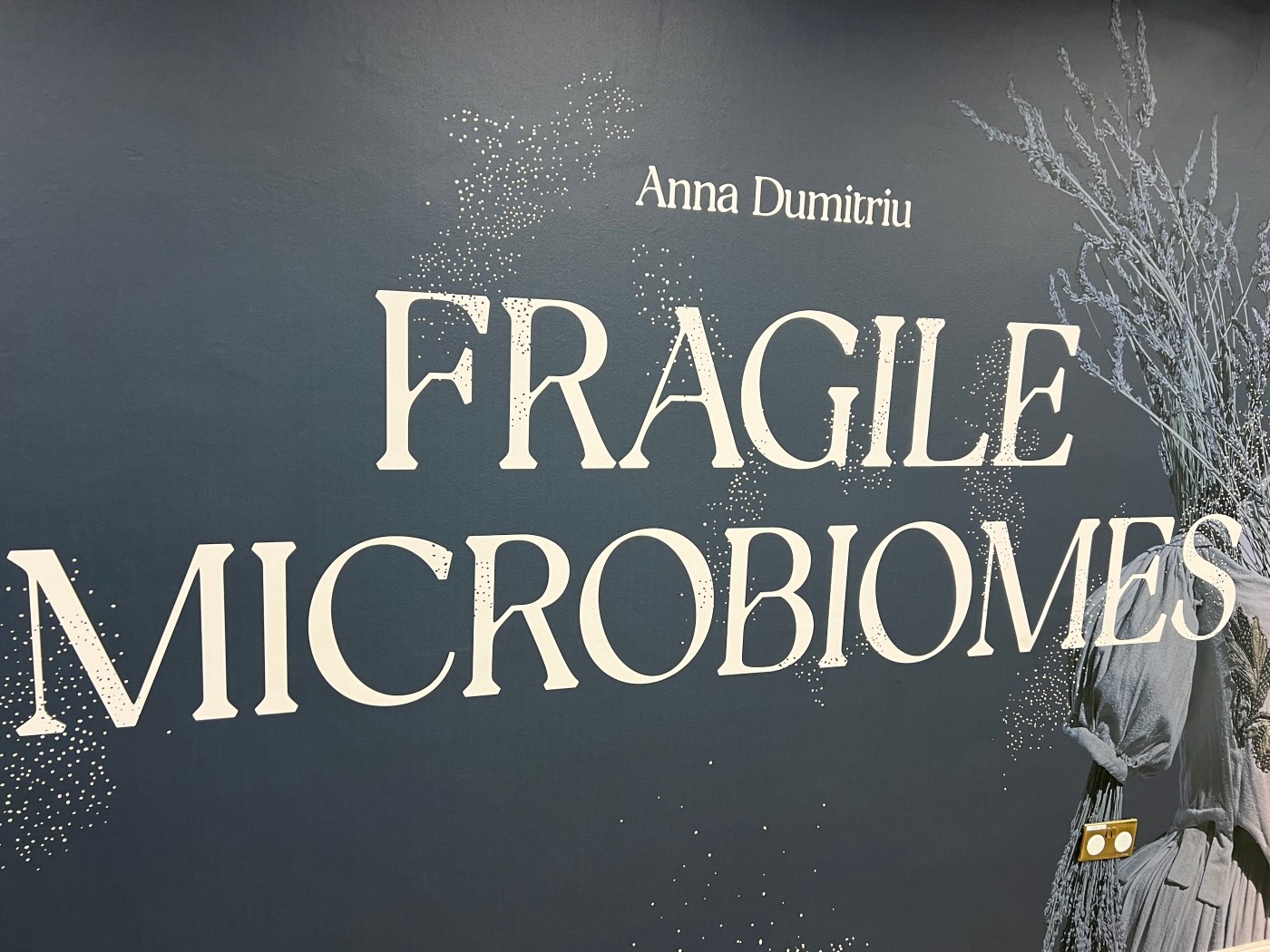
I am often astounded by where artists get ideas for their work but this exhibition had even me surprised. The name for the branch in question is Bioart and is a marriage between art and science, with, as its name suggests, a leaning towards biology.
As Edward Appleyard, Chief Executive of Thackray Museum of Medicine, pointed out in his introduction to the event, there is nothing new in science and art colliding, citing Leonardo Da Vinci as an early example. As I recall, he used to design helicopters and parachutes when not painting ladies with enigmatic smiles.
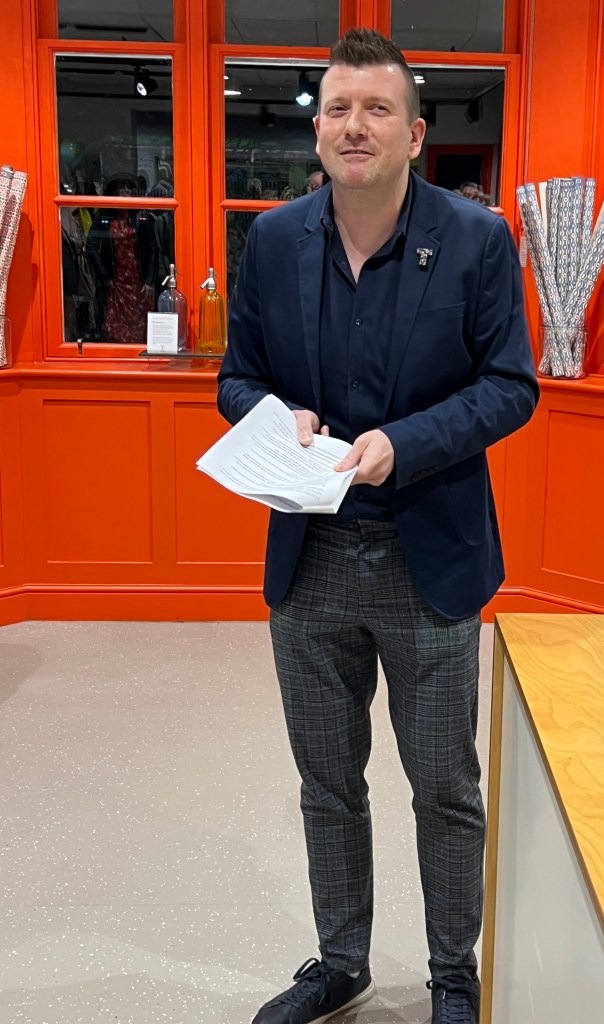
Edward Appleyard
Mr Appleyard also broke the good news that the museum had been awarded a grant of £228,000 by the National Lottery Heritage Fund, saying that they were also the recipients of the first ever Heritage Fund grant.
He went on to introduce the artist who created the pieces in the exhibition, Anna Dumitriu, who he pointed out was the founder of the Institute of Unnecessary Research in 2004. Their strap line according to the website is a quote attributed to Albert Einstein, ‘If we knew what we were doing it wouldn’t be called research, would it?’ With a sense of humour like that, I was on the artist’s side from the off.

Anna Dumitriu
In her welcome she said that she had always had a soft spot for the Thackeray Museum and had a long-held desire to exhibit here. She described herself as being an artist with a keen interest in science, and, after giving us an insight into some of the pieces, introduced Dr Jane Freeman, Visiting Research Fellow at the University of Leeds, who said that she was a scientist with a keen interest in art, and produced work of her own as well as collaborating with Ms Dumitriu.
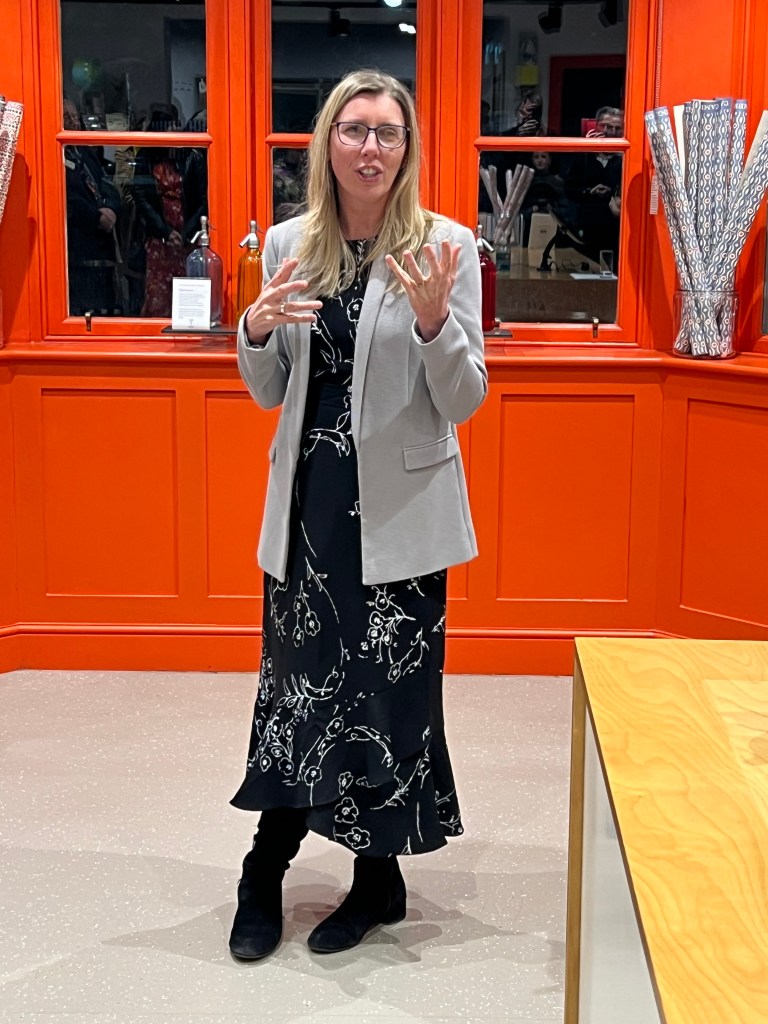
Dr Jane Freeman
Her specialist field is Clostridium difficile infection and antimicrobial resistance and she imparted the chilling news that by 2050 more people would die from infections which had become resistant to antibiotics than would meet their demise through cancer. This came as a great comfort to me as, from the beginning of December to the end of January, I had been living on a diet of oral and infused antibiotics to combat a fairly severe infection. I am now hoping that the medication in question was too clever to be fooled by my dumb body trying to negate its efficacy!
Formalities over, and a second glass of wine as a comforter, I had a stroll around the exhibits, marvelling at the ingenuity behind them.
My interest was first aroused by a Pneumothorax Machine which was used to treat tuberculosis patients from the 1930s to the 1950s. The idea is that the air would be sucked out of the infected lung to collapse it, thus giving it a ‘rest’ and time to heal itself. When it was thought to be sorted, should the patient have survived, it would be reinflated and the job would be done. The texture carved on the box containing the instrument is a representation of that of the damaged organ. The items on the table surrounding it are replicas of how the collapsed lung would look.

To underline the prognosis from Dr Freeman, experiments are again being carried out with this form of treatment to combat the reduced effects of antibiotics.
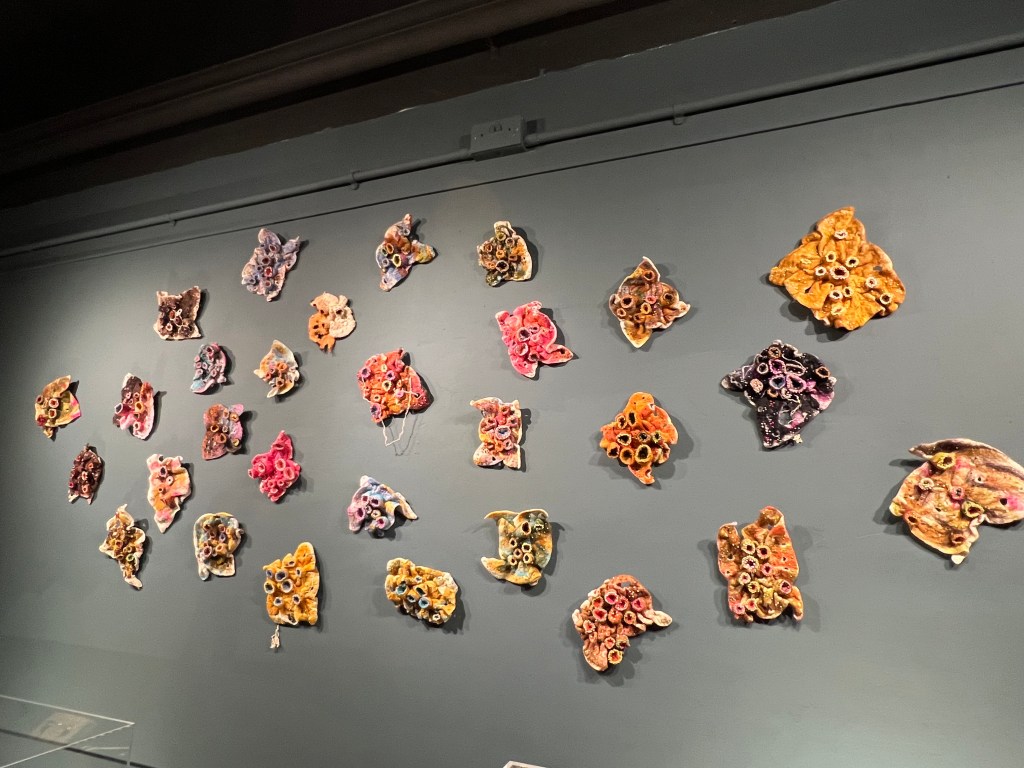
This artwork, a collaboration between Ms Dumitriu and Dr Freeman, made from felt, represents the lining of the gut and the bacteria which live inside and has been impregnated with their respective DNA. It also contains bilirubin and biliverdin, two bile pigments which give faeces their colour. Are you enjoying that chocolate biscuit? The purpose of the work is to show how excessive use of antibiotics can lead to Clostridioides difficile causing unpleasant side effects. The holes show how spaces can be left for more potentially dangerous bacteria.

Next, another machine, this time a sculpture inspired by a microbial ecosystem called a gut model. Scientists at the University of Leeds use them to study the effects of antibiotics on the human gut microbiome and how Clostridioides difficile infection occurs because of this. This was again constructed by Ms Dumitriu in conjunction with Dr Freeman but this this time also Alex May.
There are obviously too many items to detail here, some displayed in other parts of the museum where they are deemed to be more relevant to the narrative of the various sections involved, but I would like to end with a couple of more positives pieces, both of which illustrate the means taken to prevent infection in the first place.

This piece by the artist in collaboration with Dr Melissa Grant and Alex May, is called Teeth Marks and is a talisman believed to protect its wearer from harm. It highlights the link between jewellery-making and dentistry, the former trade being one which made false teeth for the latter. The items include a narwhal tusk, a symbol of dentistry, various extraction tools and a tooth from an Anglo-Saxon archeological site which had been ground flat by the owner’s gritty diet.
Finally we come to the signature piece from the exhibition, Plague Dress.

It is based on a dress style from 1665 and made from raw silk, hand-dyed with walnut husks recommended by a herbalist of the time, Nicholas Culpeper, for treating the plague. The appliqué on the bodice is from original 17th century embroideries impregnated with the DNA of Yersinia pestis bacteria i.e. plague, collected from the laboratory of the National Collection of Type Cultures at the UK Health Security Agency. We were assured that the bacteria were dead and posed no threat to the viewer.
The dress is stuffed and surrounded by lavender, which people carried during the Great Plague of London in 1665 to cover the stench of infection and prevent the disease which was thought to have been caused by ‘bad air’. The silk is a reference to the Silk Road , a vector for the spread of the plague, as the first, and worst-affected, tradespeople were the cloth workers who received the imported silks and linen.
If I remember correctly from my school history, the actual cause was rats fleas, the carriers of which were fortuitously wiped out by the Great Fire of London the following year.
So, should you fancy a trip down Memory Lane to when the population was either being wiped out by disease, or the cure, why not have a stroll round Thackeray Medical Museum. Those were the good old days.
Fragile Microbiomes runs until 23rd June, 2024. Opening times 11.00am – 3.00pm Monday to Friday and 10.00am – 3.00pm Saturday, Sunday and school holidays.
For details of the exhibition, and to book, please go to https://thackraymuseum.co.uk/event/fragile-microbiomes/
To see what else is on offer at Thackeray Museum of Medicine it is https://thackraymuseum.co.uk/
For more information on Anna Dumitriu see https://annadumitriu.co.uk
Dr Jane Freeman is at https://medicinehealth.leeds.ac.uk/dir-record/academic-industry-profiles/1400/jane-freeman-clinical-lectureship
All photographs by Stan Graham
 Tyke It To The Limit